

Features
-
Why Corporate Purpose Should Matter to Boards
- How AI Offers Boards an Alternative Path to Growth
- A Three-Year Plan for Effective Board Evaluations
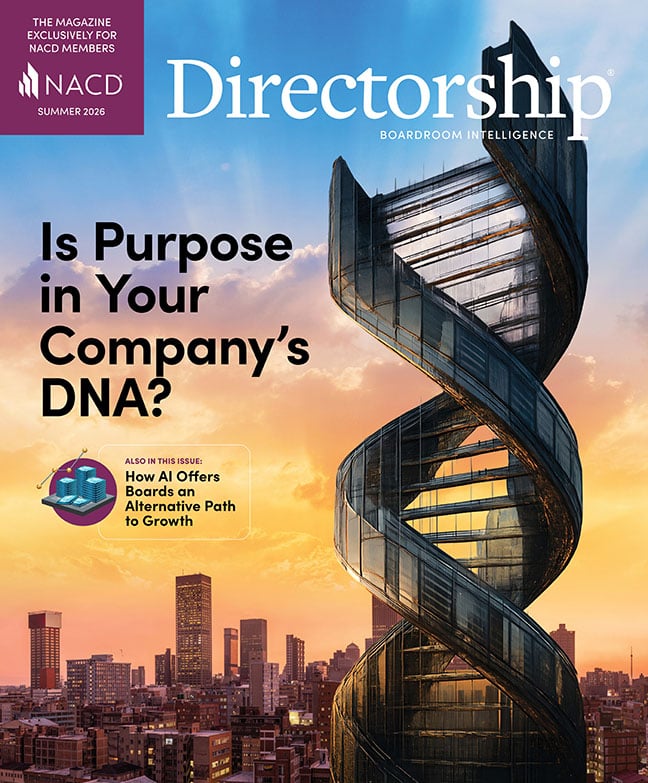

StockForStrangers + Udo Kieslich/adobe.stock.com
Directorship Magazine
Why Corporate Purpose Should Matter to Boards
Key Points
- Corporate purpose has evolved from simple shareholder primacy to a broader model that integrates the interests of all stakeholders to drive long-term strategy, reputation, and financial performance.
- While many organizations are reducing public emphasis on contentious terms due to political polarization, they continue to embed purpose-driven principles into their operations and internal cultures.
- Boards should play a proactive role in defining and auditing corporate purpose, especially as a guiding framework for navigating the ethical and operational disruptions caused by artificial intelligence.
This AI-generated summary, based on content on this page, was reviewed by NACD editors for accuracy.
In recent years, prominent businesses have shifted their view of corporate purpose toward a model that prioritizes long-term stakeholder value. By embedding clear purpose into operations, companies can enhance employee engagement and build brand resilience that allows them to navigate economic uncertainty with greater staying power.
For boards, the challenge lies in defining an authentic purpose that serves as a strategic anchor, particularly during rapid technological and social shifts. Oversight involves selecting the right CEO to support the company's purpose and weighing how to discuss purpose in the public eye. As artificial intelligence, in particular, introduces novel risks, a well-articulated purpose provides the necessary framework for boards to guide their organizations through seismic societal changes while maintaining public trust.
Thank you for your interest in this page.
Member-Only Content
For full access, please log in, or explore membership options.

Noah Kirsch is a contributing writer for Directorship and Directorship Online.
Explore All Directorship Issues