

Trending Oversight Topics
Governance Research
Governance Surveys
Directorship Magazine

Survey
NACD Quarterly Survey - Q1 2026 - Public Company
Geopolitical Turmoil Complicates Public Company Board Oversight Efforts
“Global turmoil” disrupts supply chains and complicates acquisition efforts, even as companies look to capitalize on new technologies. “Shifting economic conditions” remains the top issue on board agendas going into the new quarter, though the war in Iran has reverberated through the business landscape.
The Q1 2026 survey was in the field from March 19 to April 1, and asked directors to identify the top business issues on their board’s agenda for Q2 2026. The survey captured responses from the 108 respondents serving on publicly traded company boards. (Quotes from survey respondents have been anonymized and appear in italics throughout.)
What are the top business issues on your board's agenda in the upcoming quarter?
(Public company respondents. Respondents could select up to five issues.)
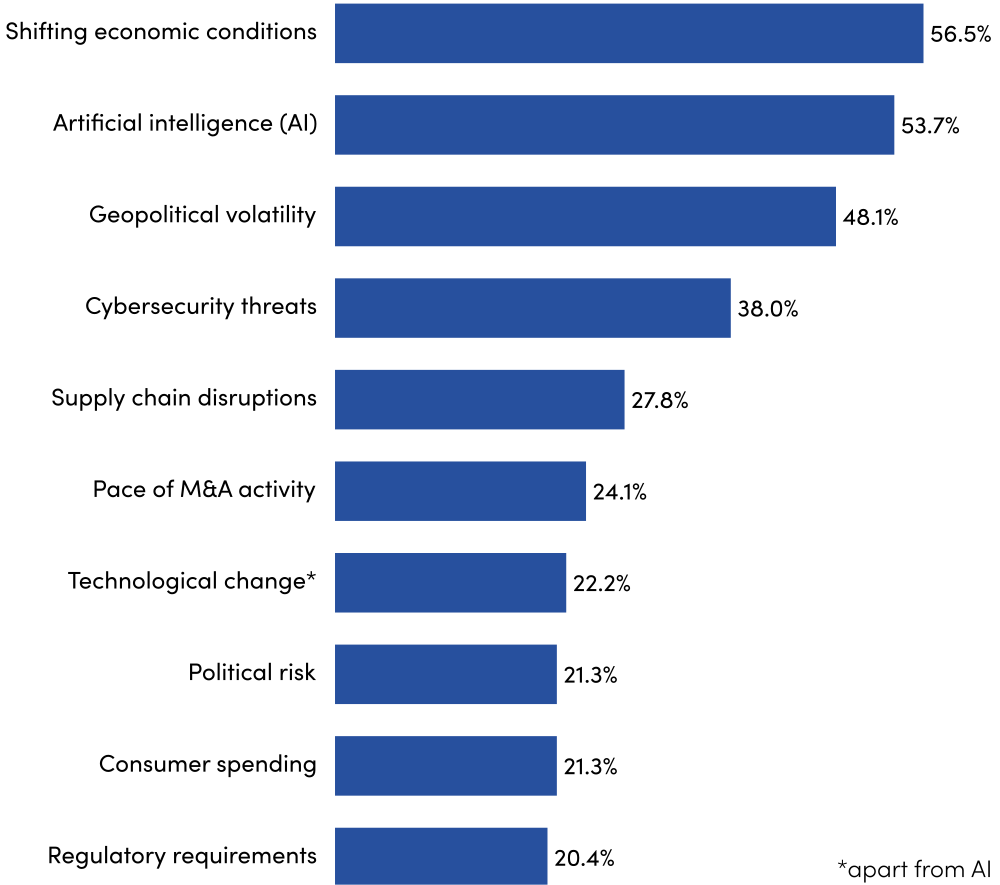
NACD Quarterly Survey - Q1 2026, Public company respondents, n=108
Geopolitical Volatility and Supply Chain Issues
"Geopolitical volatility" rose to become the 3rd most selected issue among public company respondents. This reflects the US and Israeli-led strikes in Iran conducted in the weeks prior to this survey. One respondent notes: "The war in the Middle East now increases the business risk, combined with the war in Ukraine, the Venezuelan crisis, and potential for animus with Cuba."
A key geopolitical concern raised by respondents is how the war could affect US relationships with traditional allies. One respondent fears that the "discord" in these relationships could, "make our international presence a bigger risk". Another expressed concerns about "customers avoiding doing business with a US company due to negative perceptions".
An associated trend, "Supply chain disruptions" was selected by more than one quarter (28%) of public company respondents and is now the 5th most selected trend, up from 11th place in the Q4 2025 survey. A primary area of focus was the Iran conflict's effect on supply chains, specifically the availability and price of oil as trade through the Strait of Hormuz has been and, as of this writing continues to be, severely limited.
In the short term, boards will have to navigate their organizations through uncertainty and volatility, as breaking news affects markets in drastic ways. In the long-term, they may have to revisit assumptions underlying strategies. As one respondent notes, the "Current war with Iran could have more permanent consequences even after conflict ends".
Technological change
AI was the number two issue among public company respondents, and "Technological change (apart from AI)" rose to 7th place from 14th in Q4 2025.
This shift reflects both a push for greater efficiency and the need to keep up with accelerating technological change. One respondent notes, "Technology has changed at a rapid pace and it has been a struggle from a resource perspective to keep pace."
Technological advances drive growth, but they also empower competitors to challenge existing market share. "If a competitor invests in a new technology to serve a core market we can easily lose market share", notes one respondent.
Pace of M&A activity
The "Pace of M&A activity" has become increasingly significant for public company respondents over the past few quarters—currently ranking 6th (up from 8th in Q4 2025 and 10th in Q3 2025).
Several high-profile deals took place in Q1 2026, with, many companies looking to gain strategic capabilities or close perceived technology gaps via acquisitions.
"Everyone is looking to advance their capability or grow more units through acquisition and if we are unable to get some of the deals we want at the right price it could be challenging for us."
That said, some respondents expressed concern regarding how global events might impact potential deals. One public company respondent notes, "We are considering some M&A, but are concerned about pricing in light of global turmoil." Another expresses it quite simply, "Volatile markets make M&A tougher".
Top Business Issues by Respondent Company Type
|
Issue |
Overall |
Public |
Private |
|---|---|---|---|
|
Artificial intelligence (AI) |
59.15% |
53.70% |
69.64% |
|
Shifting economic conditions |
54.27% |
56.48% |
50.00% |
|
Geopolitical volatility |
49.39% |
48.15% |
51.79% |
|
Cybersecurity threats |
39.63% |
37.96% |
42.86% |
|
Supply chain disruptions |
26.22% |
27.78% |
23.21% |
|
Political risk |
23.78% |
21.30% |
28.57% |
|
Competition for talent |
21.95% |
17.59% |
30.36% |
|
Regulatory requirements |
20.73% |
20.37% |
21.43% |
|
Pace of M&A activity |
20.73% |
24.07% |
14.29% |
|
Inflation rate |
20.73% |
18.52% |
25.00% |
|
Consumer spending |
20.12% |
21.30% |
17.86% |
|
Technological change (apart from AI) |
19.51% |
22.22% |
14.29% |
NACD Quarterly Survey - Q1 2026
Explore data from private company respondents to this survey here.
Geopolitical Turmoil Complicates Public Company Board Oversight Efforts
“Global turmoil” disrupts supply chains and complicates acquisition efforts, even as companies look to capitalize on new technologies. “Shifting economic conditions” remains the top issue on board agendas going into the new quarter, though the war in Iran has reverberated through the business landscape.
The Q1 2026 survey was in the field from March 19 to April 1, and asked directors to identify the top business issues on their board’s agenda for Q2 2026. The survey captured responses from the 108 respondents serving on publicly traded company boards. (Quotes from survey respondents have been anonymized and appear in italics throughout.)
What are the top business issues on your board's agenda in the upcoming quarter?
(Public company respondents. Respondents could select up to five issues.)
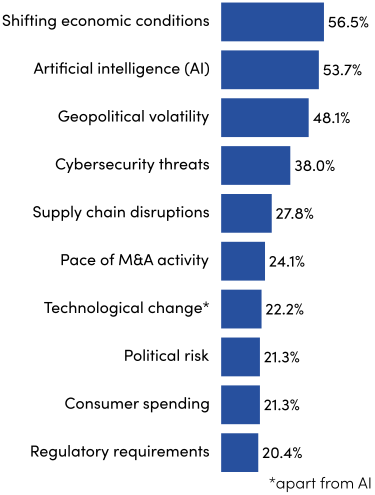
NACD Quarterly Survey - Q1 2026, Public company respondents, n=108
Geopolitical Volatility and Supply Chain Issues
"Geopolitical volatility" rose to become the 3rd most selected issue among public company respondents. This reflects the US and Israeli-led strikes in Iran conducted in the weeks prior to this survey. One respondent notes: "The war in the Middle East now increases the business risk, combined with the war in Ukraine, the Venezuelan crisis, and potential for animus with Cuba."
A key geopolitical concern raised by respondents is how the war could affect US relationships with traditional allies. One respondent fears that the "discord" in these relationships could, "make our international presence a bigger risk". Another expressed concerns about "customers avoiding doing business with a US company due to negative perceptions".
An associated trend, "Supply chain disruptions" was selected by more than one quarter (28%) of public company respondents and is now the 5th most selected trend, up from 11th place in the Q4 2025 survey. A primary area of focus was the Iran conflict's effect on supply chains, specifically the availability and price of oil as trade through the Strait of Hormuz has been and, as of this writing continues to be, severely limited.
In the short term, boards will have to navigate their organizations through uncertainty and volatility, as breaking news affects markets in drastic ways. In the long-term, they may have to revisit assumptions underlying strategies. As one respondent notes, the "Current war with Iran could have more permanent consequences even after conflict ends".
Technological change
AI was the number two issue among public company respondents, and "Technological change (apart from AI)" rose to 7th place from 14th in Q4 2025.
This shift reflects both a push for greater efficiency and the need to keep up with accelerating technological change. One respondent notes, "Technology has changed at a rapid pace and it has been a struggle from a resource perspective to keep pace."
Technological advances drive growth, but they also empower competitors to challenge existing market share. "If a competitor invests in a new technology to serve a core market we can easily lose market share", notes one respondent.
Pace of M&A activity
The "Pace of M&A activity" has become increasingly significant for public company respondents over the past few quarters—currently ranking 6th (up from 8th in Q4 2025 and 10th in Q3 2025).
Several high-profile deals took place in Q1 2026, with, many companies looking to gain strategic capabilities or close perceived technology gaps via acquisitions.
"Everyone is looking to advance their capability or grow more units through acquisition and if we are unable to get some of the deals we want at the right price it could be challenging for us."
That said, some respondents expressed concern regarding how global events might impact potential deals. One public company respondent notes, "We are considering some M&A, but are concerned about pricing in light of global turmoil." Another expresses it quite simply, "Volatile markets make M&A tougher".
Top Business Issues by Respondent Company Type
|
Issue |
Overall |
Public |
Private |
|---|---|---|---|
|
Artificial intelligence (AI) |
59.15% |
53.70% |
69.64% |
|
Shifting economic conditions |
54.27% |
56.48% |
50.00% |
|
Geopolitical volatility |
49.39% |
48.15% |
51.79% |
|
Cybersecurity threats |
39.63% |
37.96% |
42.86% |
|
Supply chain disruptions |
26.22% |
27.78% |
23.21% |
|
Political risk |
23.78% |
21.30% |
28.57% |
|
Competition for talent |
21.95% |
17.59% |
30.36% |
|
Regulatory requirements |
20.73% |
20.37% |
21.43% |
|
Pace of M&A activity |
20.73% |
24.07% |
14.29% |
|
Inflation rate |
20.73% |
18.52% |
25.00% |
|
Consumer spending |
20.12% |
21.30% |
17.86% |
|
Technological change (apart from AI) |
19.51% |
22.22% |
14.29% |
NACD Quarterly Survey - Q1 2026
Explore data from private company respondents to this survey here.