Cybersecurity
What Boards Should Know About Today’s Threat Actors

NACD Members Please Log In.


Chapters Near You
The Chapter Network is one of the most valuable benefits of NACD membership. It’s a coast-to-coast governance community for actively engaged directors looking to cultivate meaningful peer relationships.
Chapters Near You
The Chapter Network is one of the most valuable benefits of NACD membership. It’s a coast-to-coast governance community for actively engaged directors looking to cultivate meaningful peer relationships.
Governance Research
Governance Surveys
Directorship Magazine

Online Exclusive
Strengthening Strategic Stewardship: An Interview with Michael Montelongo
Hear a veteran director’s thoughts on how boardrooms are shifting from episodic oversight to “continuous strategic navigation.”
 As the demands on boards grow, how does oversight evolve to meet new expectations for bridging the public and private sectors?
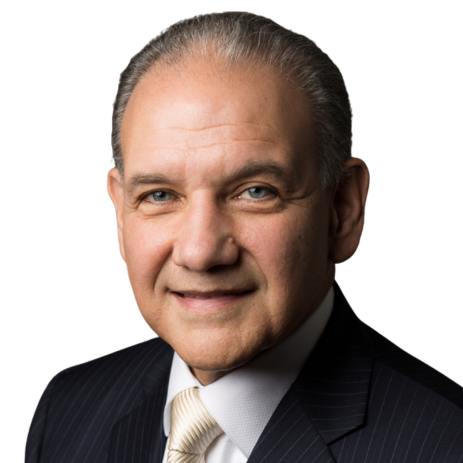
The Honorable Michael Montelongo, a director on the boards of Civeo Corp., NACD, and Merlin, spoke with Adam Bryant, a senior managing director at The ExCo Group, and David Reimer, CEO of The ExCo Group. Montelongo served as the chief financial officer and assistant secretary of the US Air Force for Financial Management and Comptroller. In the interview below, they explore the concept of “patriotic capitalism,” the necessity of foresight in managing interconnected risks, and the foundational pillars of leadership grounded in service and character.
This interview first appeared in Adam Bryant’s LinkedIn series, “The Director’s Chair.”
Reimer: How have conversations in the boardroom evolved? And how should they evolve?
Montelongo: It’s important to first acknowledge the governance fundamentals that remain, regardless of the context. There are three buckets: The first is strategy; [the] second is TLC—talent, leadership, and culture; [and the] third is GRC—governance, risk, and compliance. Fundamentally, those are the key areas, and we have to continue to focus on those as we navigate this new environment.
Boards also have always been responsible for managing or balancing tensions, including the short term versus the long term, and both supporting and respectfully challenging management. Another tension is the need for guardrails while making sure that they are not so tight that you are somehow keeping innovation from developing its full potential.
That said, we are in a dramatically altered operating environment. The board aperture is absolutely expanding, and our stewardship as directors is being stress-tested. We're shifting from episodic oversight to what I would call continuous strategic navigation.
Agendas are no longer as compartmentalized as they might have been a short time ago. The interdependencies are significant, especially among risks. That requires boards to have a greater fluency about risk, because the inbox on risks is oversubscribed.
Because of my experience in national security, I think a lot about geostrategic risk. I believe the business community writ large shares a responsibility for national security; it’s not just the government’s responsibility. I call it patriotic capitalism. That's not waving flags. It's not about politics, and it's not about picking sides.
It's about aligning economic power with national resilience. Because with our adversaries, the competitive landscape doesn't just show up as missiles and tanks. It shows up as semiconductors, data centers, and cyberattacks. Economics is the new battlefield, and technology is the terrain.
For me, the private sector is no longer an afterthought in this. It has to be part of the solution. We have to have greater collaboration between the private sector and our public officials so that we're not compartmentalized, we're not siloed, and we're not at cross-purposes. We need to work together proactively because we have a history of only acting after a crisis hits.
Bryant: What other demands does this moment place on boards?
Montelongo: This environment puts a greater premium now on resilience and adaptability for boards, CEOs, and management teams. You have to be able to pivot on a dime, learn from all these events as they unfold, and then plan for different scenarios.
Read Bryant’s other interviews:
That requires you to think ahead, which is why boards exist. Management is supposed to be heads down on execution, but boards are supposed to be seeing over the horizon and exercising foresight.
Reimer: What are the most important X factors that you’re looking for in CEO candidates now?
Montelongo: I've had the good fortune of working in the military, government, business, and academia. What is true in all those different fields is that leadership, at the end of the day, is about inspiring others to believe and making that belief a reality. It's about presence, it's about gravitas, and it’s about making people feel better after they've had a conversation with you.
The best CEOs are able to do all that while navigating this new operating environment. And that requires judgment, character, courage, and trustworthiness. When I was a young lieutenant, I learned a key catchphrase that still guides me: ‘mission first, people always.’ You have an obligation and responsibility to execute, but you do that not at the expense of people. You do that by taking care of your people, always.
Bryant: Is there a leadership lesson that you draw on whenever you walk into a boardroom?
Montelongo: I have both an inspirational and practical answer to that question. The inspirational piece is that I had a service gene firmly implanted in my DNA early in my life. It began with my family [and] my faith tradition, and I’ve had many influential mentors, the people I call my ‘angels along the way.’
The roots for me go back to where I grew up, on the Lower East Side of New York City. That’s where I learned not only the Jesuit ideals of education but also their emphasis on service. And when I went to [the US Military Academy at] West Point, that was reinforced through the whole value lens of ‘duty, honor, country.’ It’s why my leadership philosophy is to ‘learn, grow, serve and contribute.’
Some of the more practical experiences are that I have a love for music. That was going to be my livelihood before I decided to do what I'm doing now. I had bands from grade school through graduate school. That taught me the practical execution components of leadership. If you have a band, you have to assemble a team of individuals with different capabilities and competencies into a high-performing team. It's about sales, marketing, and logistics.
Reimer: What do you consider to be the hardest part of leadership?
Montelongo: As a board member, you have to be aware that you are occupying a tremendously valuable piece of real estate and that there is an enormous obligation that goes with that. You have to work hard at remaining grounded in your core beliefs and values. You can easily be distracted by so many variables that want to pull you away from that North Star.
Another big challenge of leadership is making consequential decisions that profoundly impact other people when you don't have perfect information. It certainly is a burden, and it takes a great degree of courage among board members to do what our constituencies are expecting us to do. It is not easy and never will be.