Cybersecurity
What Boards Should Know About Today’s Threat Actors

NACD Members Please Log In.


Chapters Near You
The Chapter Network is one of the most valuable benefits of NACD membership. It’s a coast-to-coast governance community for actively engaged directors looking to cultivate meaningful peer relationships.
Chapters Near You
The Chapter Network is one of the most valuable benefits of NACD membership. It’s a coast-to-coast governance community for actively engaged directors looking to cultivate meaningful peer relationships.
Trending Oversight Topics
Governance Research
Governance Surveys
Directorship Magazine

Online Exclusive
How Independent Directors of Multigenerational Family Businesses Can Support Next-Generation Readiness
Independent board members are uniquely positioned to support the preparation of the next generation in multigenerational family businesses.
This AI-generated summary, based on content on this page, was reviewed by NACD editors for accuracy.
A leading governance model for large, multigenerational family-controlled businesses includes some form of dual-governance system. This typically comprises a business board, which oversees the company and management, and an owners’ board or family council that oversees ownership matters and prepares next-generation family members to be effective stewards of the business. Such governance structures are used since many families that own larger operating businesses desire to transfer ownership to the next generation of family members.
Many owners’ boards prepare the next generation through leadership development, mentoring, and exposure to the business, such as through periodic business board observation. While these developmental actions are important, they typically share a common blind spot: The next generation is often being prepared for how the business functions today, while the company they will inherit is still evolving as the company grows and the world changes. Independent directors have a distinct role to play in reducing that gap.
Consider why the definition of next-generation readiness moves so quickly now. A generational transition can take 10 to 15 years, and the pace of change inside that window has accelerated.
Artificial intelligence and increasingly capable automation technologies are reshaping how companies compete. Ownership structures, such as generation-skipping and dynasty trusts, are growing more complex. Meanwhile, waves of family businesses are transferring ownership and control to the next generation at the same time.
For example, in just a decade, a regional operator can become a national or cross-border platform that runs on a completely different technology stack. Preparing future owners for the business as it exists today results in the next generation arriving a step behind. This is where the business board can play a key role in next-generation preparation, and where independent directors matter most.
Independent directors are uniquely positioned to see where the business is headed, as the business board is typically involved in the future strategic direction of the business. Because they sit outside the family system, these board members bring outside-in perspectives formed across other industries and business cycles that can challenge internal assumptions and established ways of thinking.
That vantage point can help define the skills, judgment, and understanding that tomorrow’s family owners will need to be effective stewards of the business. Without such perspectives, owners’ boards may develop the next generation with energy and skills that are not aligned with what the business is expected to become.
Independent directors can help define what future ownership readiness requires and support next-generation development efforts by doing the following:
 Keep readiness on the agenda. Because the requirements for next-generation readiness will continue to evolve, the business board should revisit them on a defined cadence, just as it revisits strategy and risk. This recurring discussion provides a forum for the board to assess emerging ownership development needs and offer input to the owners’ board as to how it can most effectively support the development of future owners.
 Translate strategy into ownership development requirements. When the business board reviews long-term strategy, it should ask what the future will demand of next-generation owners, especially trustees. For example, a company pursuing significant acquisitions, international expansion, or AI-enabled business models may require future owners to be more fluent in capital allocation, risk oversight, and technology-related strategic decisions than prior generations.
 Share the business’s future direction with next-generation owners. Independent directors have a valuable perspective on where the business is going. Trustees, beneficiaries, and future owners often have less visibility because they are typically not involved in the board’s ongoing strategy, capital allocation, and risk discussions.
A business board that periodically briefs future owners, trustees, and beneficiaries on the company’s strategic direction helps close the gap between the board’s vision for the business and the next generation’s understanding of what they are preparing to own and steward. Those conversations are often most effective when conducted through existing family governance forums, such as a family council or owners’ board, where ownership development is already a core responsibility.
 Develop the habit of anticipation. One of the most valuable skills future owners can develop is the ability to anticipate where the business and its industry are heading. Independent directors can help build that capability by exposing future owners to board-level discussions about long-term trends, disruptive forces, strategic alternatives, and scenario planning.
For example, future owners might participate in a facilitated discussion on how AI could reshape the company’s competitive position or review alternative growth scenarios and discuss the implications for capital needs, ownership expectations, and risk. Scenario thinking, exposure across industries, and genuine engagement with disruption build that judgment more effectively than mastery of today’s organizational chart.
None of this displaces the business board’s core work of ensuring the company is well governed. However, a business board that effectively oversees the company and also defines what ownership readiness means gives the family both the operational confidence that the business is in good hands and a clearer path for the next generation to become stewards.
The views expressed in this article are the authors’ own and do not represent the perspective of NACD, Ernst & Young LLP, or other members of the global EY organization.
Ernst & Young LLP is a NACD sponsor, providing directors with critical and timely information, and perspectives. Ernst & Young LLP is a financial supporter of the NACD.
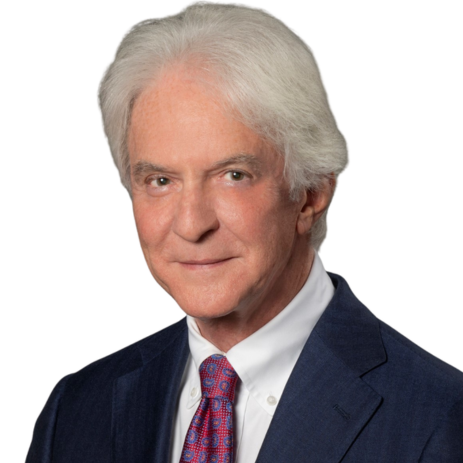
James Bly is a managing director and a national practice leader in Family Enterprise Business Services at Ernst & Young LLP.

Dominic Venditti is a senior manager in Family Enterprise Business Services at Ernst & Young LLP.