Governance Outlook

Boards Shift Their Focus to Execution

By Friso van der Oord and Ted Sikora

12/10/2025

Governance Outlook Report Surveys and Benchmarking

“Focused but optimistic” sums up directors’ outlook for 2026. With uncertainty expected to persist in the coming year, boards are strengthening their oversight of the increasingly complex execution required to deliver their companies’ strategic ambitions.

The NACD 2026 Governance Outlook Survey, in the field in late October–early November 2025 captures directors’ perspectives on the upcoming trends affecting their organizations, their organizations’ key growth strategies for 2026, and their boards’ top priorities. The data point to a clear shift in board focus. In an environment where many disruptive, external forces are affecting all competitors similarly, the rigor and quality of strategy execution is becoming a primary differentiator. Boards are recognizing that in this environment poor execution of a well-formulated strategy can put their companies at a significant disadvantage.

Shifting Economic Conditions Are the Leading Concern

Looking at 2026, directors ranked “Shifting economic conditions” as most likely to impact organizational performance (see Trends with the greatest impact on organizational performance over the next 12 months). This economic focus has been consistent throughout 2025, as shown by the NACD Quarterly Surveys. Other factors, such as AI, regulatory requirements, geopolitical volatility, and the competition for talent, have likewise been top issues for directors throughout 2025 and are expected to remain so in 2026.
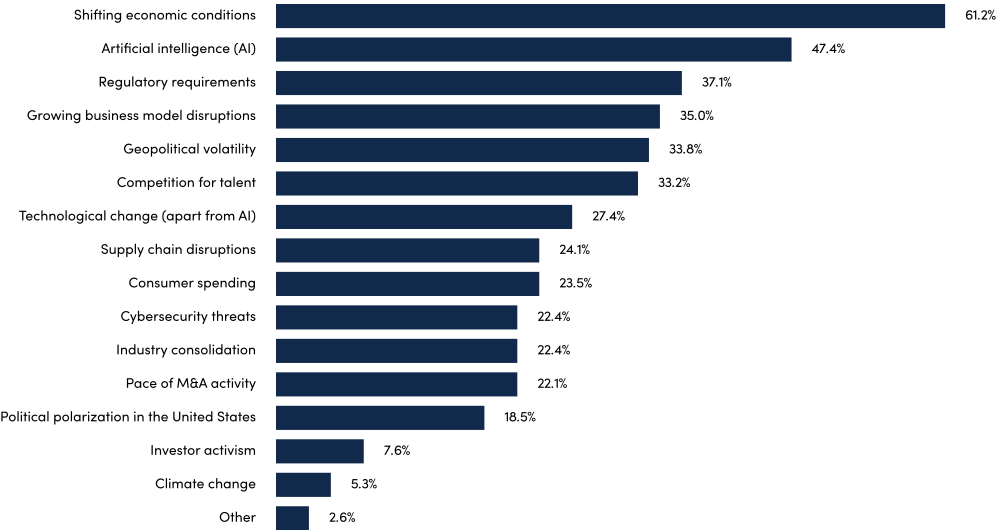


Trends with the greatest impact on organizational performance over the next 12 monthsChart of survey results

Source: NACD 2026 Governance Outlook Survey, n=340
Q: What five trends do you foresee having the greatest performance impact on your company over the next 12 months?


Respondents’ comments highlight inflation, commodity prices, unpredictable changes to interest rates, and the health of the job market as factors that collectively contribute to a general atmosphere of economic uncertainty. Notably, short-term uncertainties have shifted away from concerns over supply chain disruptions, with companies having adapted to new tariff regimes.

Looking deeper at directors’ views on the economy, there is some pessimism regarding the near term (see Anticipated stage of economic cycle of United States economy by Q2 2026). Just over a third of respondents anticipate a recession in 2026, compared to 10 percent who predicted a 2025 recession in the previous edition of the survey.
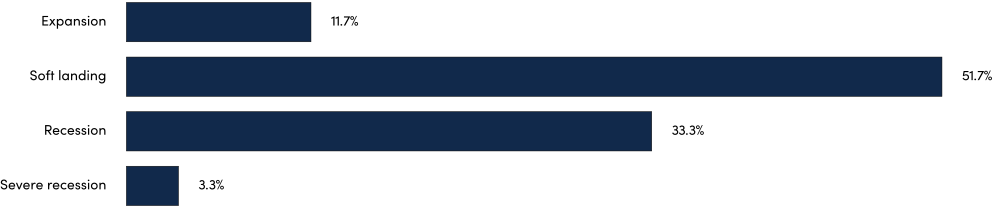


Anticipated stage of economic cycle of United States economy by Q2 2026

data visualization graphic from data points in the article

Source: NACD 2026 Governance Outlook Survey, n=333
Q: Based on current economic conditions in which of the following stages of economic cycle do you believe the United States economy will be by Q2 2026?


Despite economic concerns, directors are optimistic about their organizations’ growth prospects in 2026. More than 40 percent of respondents are “extremely confident or very confident” and more than 35 percent are “moderately confident” about growth prospects.

Five Actions for the Year Ahead

Facing an unpredictable year, disciplined and effective strategy execution will be crucial. The board’s traditional role in strategy oversight is expanding to encompass a more rigorous, sustained focus on how the organization is meeting strategic goals in a fast-moving environment. Here are five ways directors can help their organizations thrive and grow in 2026.

1. Strengthen Oversight of Execution and Growth

Sixty percent of respondents rank the board’s oversight of strategy execution as the top oversight improvement area for 2026—a far higher percentage than for a focus on strategy development oversight or other board oversight areas.

Rigid, multiyear planning cycles are being replaced by a more continuous, agile approach in which strategy is adapted and course-corrected in real time. Disciplined oversight of strategy execution ensures that adjustments made under the pressure of the rapidly changing business environment do not erode long-term value.

Adjusting board agendas may be one action to take. More than a quarter of responding directors noted that their boardroom agenda had too little focus on growth discussions.

Boards are also adjusting how they oversee strategy execution. The majority of respondents (62 percent) are increasing strategy discussions in board meetings, and more than 45 percent are increasing dialogue between board meetings. Boards are also increasing the time spent with the C-suite and senior management (forty-four percent of respondents) and one-third are requesting more frequent strategic updates from management.

Along with this, many boards may need to clarify how they will provide more disciplined oversight of strategy execution without becoming unduly operationally focused. Directors also need to be mindful of their demands on management time and resources. Effective board governance allows the board to both oversee and strategically advise their management team. (For more on this aspect, see “Enhancing the Board’s Role as Strategic Advisor.”)

2. Focus on the Alignment of Capabilities and Resources to Deliver

As organizations sharpen their strategic goals, the board and management need to keep a laser focus on the question of how are we achieving these goals. This will help management determine where and how organizational resources need to be aligned, or realigned, to execute the strategy. Capital and resource allocation become critical areas to review, ensuring that new strategic priorities aren’t starved of needed investments.

Based on the survey, organic growth will be the primary growth driver for most organizations in 2026 (see Primary driver of organizational growth in 2026, driven by better operational efficiencies (78 percent) and technology investments (72 percent) (see Growth initiatives likely to be pursued in 2026).
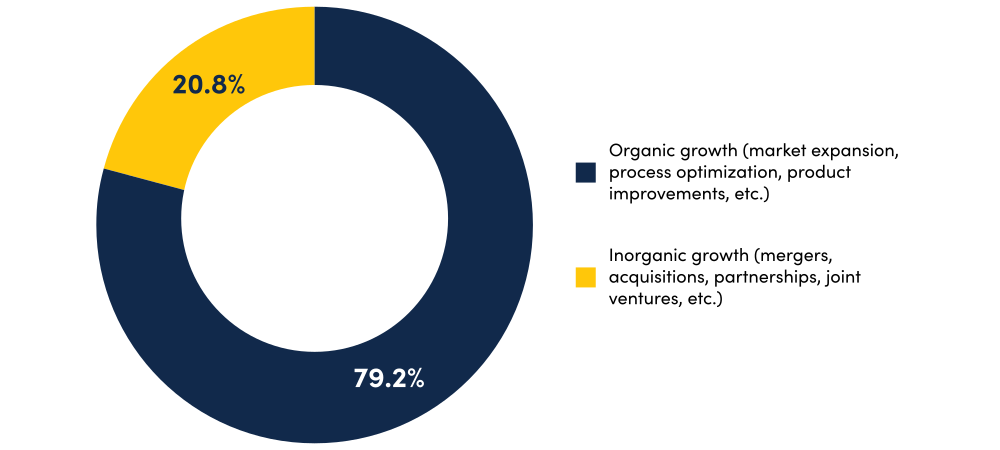


Primary driver of organizational growth in 2026

Chart of survey results

Source: NACD 2026 Governance Outlook Survey, n=366
Q: What will be the primary driver of growth for your organization in 2026?
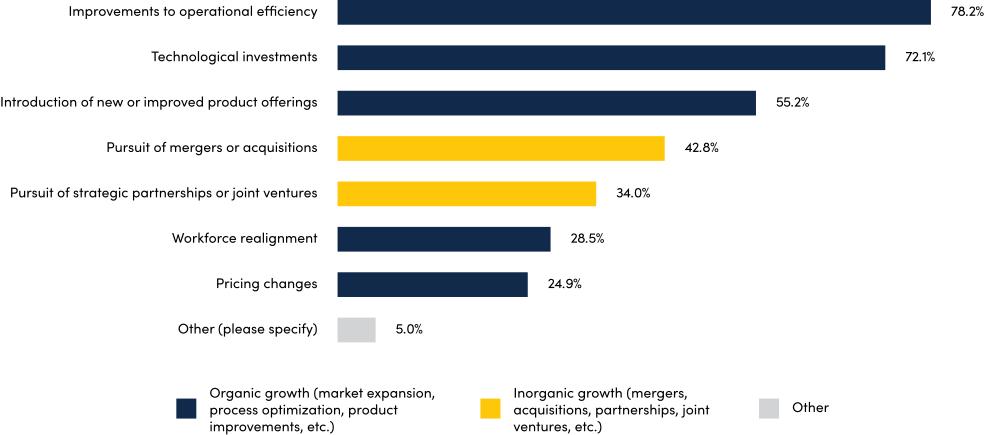
Growth initiatives likely to be pursued in 2026

Chart of survey results

Source: NACD 2026 Governance Outlook Survey, n=362
Q: What growth initiatives are your board and management team likely pursue in 2026?


However, companies face challenges in transforming the way work gets done. Directors identified insufficient organizational agility, shortages of skilled employees, and the lack of adaptability of the workforce as the top three challenges to growth (see Internal barriers to growth anticipated in 2026). Overall, these challenges show directors’ concerns as to whether their organizations can adapt quickly enough to respond to the shifting business environment.
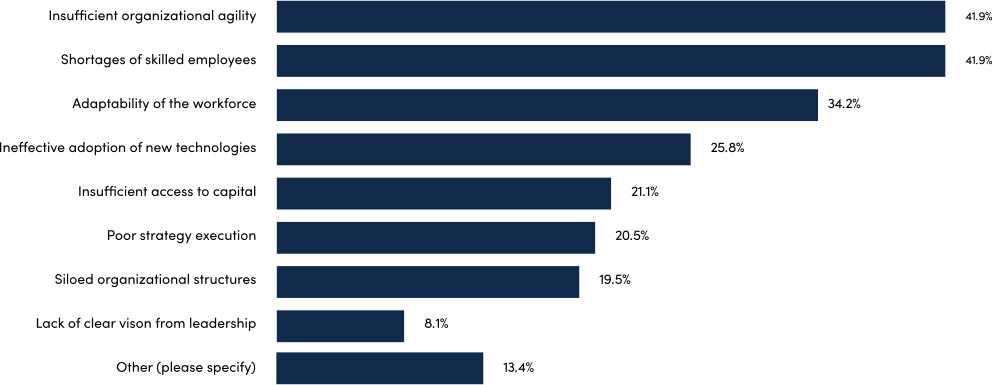

Internal barriers to growth anticipated in 2026

data visualization graphic from data points in the article

Source: NACD 2026 Governance Outlook Survey, n=298
Q: Which of the following internal barriers to growth do you anticipate your organization will encounter in 2026?


In addition, many firms are at a difficult juncture in workforce planning, balancing the need for new skills and possibly new jobs that may require significant restructuring with maintaining an engaged, future-ready workforce. In terms of workforce size, about one-quarter of survey respondents indicate that they expect workforce reductions in the coming year, but larger percentages expect to see no change or an expansion (see Expected changes in size of organization’s workforce in 2026).
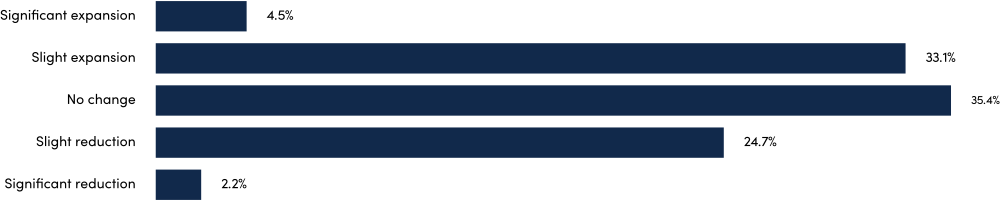

Expected changes in size of organization’s workforce in 2026

data visualization graphic from data points in the article

Source: NACD 2026 Governance Outlook Survey, n=356
Q: What degree of change to the size of your organization's workforce do you anticipate in 2026?


Beyond workforce size, a more significant challenge for many firms may be the skills mismatch hindering their ability to optimize the potentially immense shareholder value of new technologies such as AI. A key focus for many boards in 2026 will be on the current workforce’s readiness to execute new strategies that are largely driven by ambitious technology transformations.

3. Define Clear Success Metrics

Boards will need to work with management to ensure clear, organization-wide key performance indicators related to technology investments and impacts, workforce capabilities, and other growth initiatives to identify execution barriers before they compound and stall a strategy. Nearly 50 percent of boards have worked with management to track a set of growth-focused performance metrics. Other boards may need to consider whether they have the right information and data to assess progress and identify lagging initiatives.

The strategy–performance gap illustrated by AI investment and returns highlights the execution risk that boards must monitor and address. Seventy-six percent of respondents indicate that AI investments will “definitely” or “probably” factor into their growth strategy for 2026 (see Expectations on how AI investments factor into 2026 growth strategies).


Expectations on how AI investments factor into 2026 growth strategies

data visualization graphic from data points in the article

Source: NACD 2026 Governance Outlook Survey, n=363
Q: Do investments into artificial intelligence factor into your organization's growth strategy in 2026?


However, to date, few organizations have been able to generate significant revenue gains, with most survey respondents indicating “slight” or “moderate levels” of success at achieving operational efficiencies (see Organizations’ level of success in using AI for efficiency and revenue gains). This suggests that many organizations are “still at the messy ‘sorting out’ stage,” as one director noted. Another director noted that their organization has been “focusing primarily on cost efficiencies and not enough on innovation.”
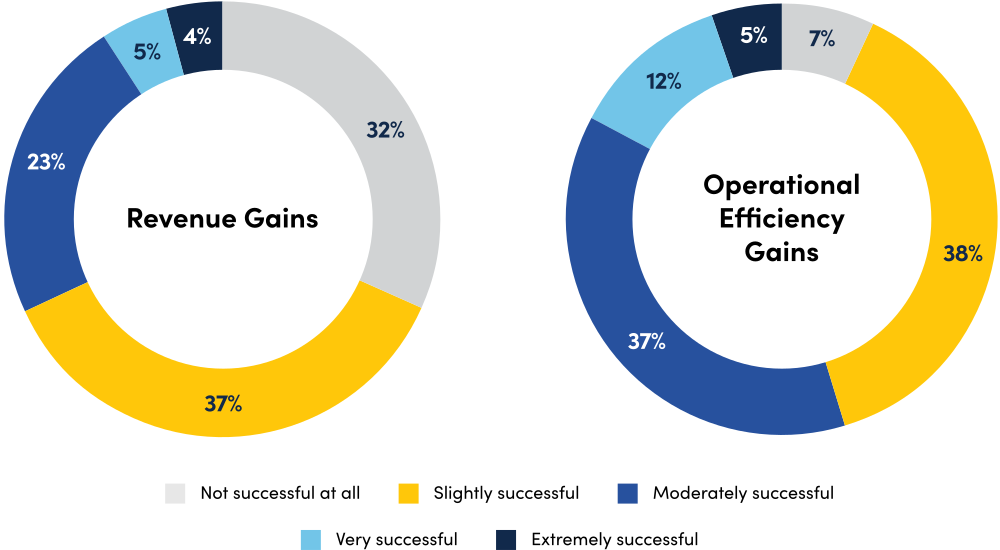

Organizations’ level of success in using AI for efficiency and revenue gains

 data visualization graphic from data points in the article

Source: NACD 2026 Governance Outlook Survey, n=276–321
Q: How would you rate the level of success that your company has had using AI to achieve revenue gains and, How would you rate the level of success that your company has had using AI to achieve operational efficiency gains


Key issues to explore with management include the following:

  • Has AI implementation yielded improvements to core products?
  • Which business processes are being redesigned or automated?
  • What are the success thresholds for pilot projects?
  • What metrics are being used to track the impact and success of AI pilots?
  • Are we being rigorous in terminating underperforming initiatives?
  • Do we have a clear plan to effectively scale AI initiatives?
  • Do we have a workforce transition plan tied to our technology and AI strategy?
  • How do we secure, retain, and train the right workforce? Are we building skills at the pace the technology requires?
  • How can we enable workforce and organizational agility that enables a return on technology investments?
4. Continuously Assess Leadership Needs and Capabilities

Strategy execution requires effective leadership, and directors must continually consider whether their organizations have the right management teams to guide their organizations. Simply put, are the individuals in key leadership roles inclined to protect the status quo, or are they prepared to execute a strategy that moves in a new direction?

In particular, directors can consider how the leadership team collaborates across technology, people, and operational functions to improve organizational agility. Directors should be attuned to leadership’s willingness for any necessary “silo busting” and organizational redesign as an indication of the organization’s capability to truly transform to drive growth. As noted above, more than 40 percent of directors have increased the time spent with senior management below the C-suite. This allows directors to gain a clearer view of the organization’s talent pipeline, emerging challenges, and operational realities where initiatives are stuck.

Perhaps the most significant leadership decision is CEO selection. “CEO succession planning” was selected as the most important board practice for improvement in the upcoming year for responding directors, with more than one-third of directors selecting this issue.

Candid boardroom conversations about succession planning for the CEO is a core board responsibility. Boards and the CEO should regularly discuss the organization’s evolving leadership capabilities and what is needed for the future. As shown in a previous NACD survey, more than 30 percent of responding public company and private company directors flagged the challenge of aligning succession with the strategic needs of the organization.

5. Keep Earning Your Board Seat

One-third of responding directors are strongly confident that their board has the collective skillset and experience to support the organization’s growth. But over 50 percent estimated that the board “probably” has the right skills and 14 percent noted “probably not” or “definitely not.”

As noted in the NACD 2025 Blue Ribbon Commission report, CEOs are increasingly looking to their boards as strategic advisors for nuanced expertise, real-world experience, and access to valuable networks. Boards must focus on building—and maintaining—the capacity to provide rigorous oversight and serve as a strategic sounding board. Director education and board succession planning are two vital board processes to support this, and 20 percent of responding directors note these areas as a priority in 2026.

Conclusion

There are many uncertainties ahead and organizations will face a series of rolling disruptions likely to include geopolitical tensions, trade wars, extreme weather events, cyberattacks, regulatory shifts, and pressure to “derisk,” or to align with national priorities. Boards that lean in—probing deeply into execution and asking tough questions about progress, impact, and capabilities—are the boards that will write the success stories of 2026 and beyond.

“Focused but optimistic” sums up directors’ outlook for 2026. With uncertainty expected to persist in the coming year, boards are strengthening their oversight of the increasingly complex execution required to deliver their companies’ strategic ambitions.

The NACD 2026 Governance Outlook Survey, in the field in late October–early November 2025 captures directors’ perspectives on the upcoming trends affecting their organizations, their organizations’ key growth strategies for 2026, and their boards’ top priorities. The data point to a clear shift in board focus. In an environment where many disruptive, external forces are affecting all competitors similarly, the rigor and quality of strategy execution is becoming a primary differentiator. Boards are recognizing that in this environment poor execution of a well-formulated strategy can put their companies at a significant disadvantage.

Shifting Economic Conditions Are the Leading Concern

Looking at 2026, directors ranked “Shifting economic conditions” as most likely to impact organizational performance (see Trends with the greatest impact on organizational performance over the next 12 months). This economic focus has been consistent throughout 2025, as shown by the NACD Quarterly Surveys. Other factors, such as AI, regulatory requirements, geopolitical volatility, and the competition for talent, have likewise been top issues for directors throughout 2025 and are expected to remain so in 2026.

Trends with the greatest impact on organizational performance over the next 12 months

Chart of responses.

Source: NACD 2026 Governance Outlook Survey, n=340
Q: What five trends do you foresee having the greatest performance impact on your company over the next 12 months?

Respondents’ comments highlight inflation, commodity prices, unpredictable changes to interest rates, and the health of the job market as factors that collectively contribute to a general atmosphere of economic uncertainty. Notably, short-term uncertainties have shifted away from concerns over supply chain disruptions, with companies having adapted to new tariff regimes.

Looking deeper at directors’ views on the economy, there is some pessimism regarding the near term (see Anticipated stage of economic cycle of United States economy by Q2 2026). Just over a third of respondents anticipate a recession in 2026, compared to 10 percent who predicted a 2025 recession in the previous edition of the survey.

Anticipated stage of economic cycle of United States economy by Q2 2026

data visualization graphic from data points in the article

Source: NACD 2026 Governance Outlook Survey, n=333
Q: Based on current economic conditions in which of the following stages of economic cycle do you believe the United States economy will be by Q2 2026?

Despite economic concerns, directors are optimistic about their organizations’ growth prospects in 2026. More than 40 percent of respondents are “extremely confident or very confident” and more than 35 percent are “moderately confident” about growth prospects.

Five Actions for the Year Ahead

Facing an unpredictable year, disciplined and effective strategy execution will be crucial. The board’s traditional role in strategy oversight is expanding to encompass a more rigorous, sustained focus on how the organization is meeting strategic goals in a fast-moving environment. Here are five ways directors can help their organizations thrive and grow in 2026.

1. Strengthen Oversight of Execution and Growth

Sixty percent of respondents rank the board’s oversight of strategy execution as the top oversight improvement area for 2026—a far higher percentage than for a focus on strategy development oversight or other board oversight areas.

Rigid, multiyear planning cycles are being replaced by a more continuous, agile approach in which strategy is adapted and course-corrected in real time. Disciplined oversight of strategy execution ensures that adjustments made under the pressure of the rapidly changing business environment do not erode long-term value.

Adjusting board agendas may be one action to take. More than a quarter of responding directors noted that their boardroom agenda had too little focus on growth discussions.

Boards are also adjusting how they oversee strategy execution. The majority of respondents (62 percent) are increasing strategy discussions in board meetings, and more than 45 percent are increasing dialogue between board meetings. Boards are also increasing the time spent with the C-suite and senior management (forty-four percent of respondents) and one-third are requesting more frequent strategic updates from management.

Along with this, many boards may need to clarify how they will provide more disciplined oversight of strategy execution without becoming unduly operationally focused. Directors also need to be mindful of their demands on management time and resources. Effective board governance allows the board to both oversee and strategically advise their management team. (For more on this aspect, see “Enhancing the Board’s Role as Strategic Advisor.”)

2. Focus on the Alignment of Capabilities and Resources to Deliver

As organizations sharpen their strategic goals, the board and management need to keep a laser focus on the question of how are we achieving these goals. This will help management determine where and how organizational resources need to be aligned, or realigned, to execute the strategy. Capital and resource allocation become critical areas to review, ensuring that new strategic priorities aren’t starved of needed investments.

Based on the survey, organic growth will be the primary growth driver for most organizations in 2026 (see Primary driver of organizational growth in 2026) driven by better operational efficiencies (78 percent) and technology investments (72 percent) (see Growth initiatives likely to be pursued in 2026).

Primary driver of organizational growth in 2026

Chart of survey results

Source: NACD 2026 Governance Outlook Survey, n=366
Q: What will be the primary driver of growth for your organization in 2026?

Growth initiatives likely to be pursued in 2026

Chart of survey results

Source: NACD 2026 Governance Outlook Survey, n=362
Q: What growth initiatives are your board and management team likely pursue in 2026?

However, companies face challenges in transforming the way work gets done. Directors identified insufficient organizational agility, shortages of skilled employees, and the lack of adaptability of the workforce as the top three challenges to growth (see Internal barriers to growth anticipated in 2026). Overall, these challenges show directors’ concerns as to whether their organizations can adapt quickly enough to respond to the shifting business environment.

Internal barriers to growth anticipated in 2026


Source: NACD 2026 Governance Outlook Survey, n=298
Q: Which of the following internal barriers to growth do you anticipate your organization will encounter in 2026?

In addition, many firms are at a difficult juncture in workforce planning, balancing the need for new skills and possibly new jobs that may require significant restructuring with maintaining an engaged, future-ready workforce. In terms of workforce size, about one-quarter of survey respondents indicate that they expect workforce reductions in the coming year, but larger percentages expect to see no change or an expansion (see Expected changes in size of organization’s workforce in 2026).

Expected changes in size of organization’s workforce in 2026

Source: NACD 2026 Governance Outlook Survey, n=356
Q: What degree of change to the size of your organization's workforce do you anticipate in 2026?

Beyond workforce size, a more significant challenge for many firms may be the skills mismatch hindering their ability to optimize the potentially immense shareholder value of new technologies such as AI. A key focus for many boards in 2026 will be on the current workforce’s readiness to execute new strategies that are largely driven by ambitious technology transformations.

3. Define Clear Success Metrics

Boards will need to work with management to ensure clear, organization-wide key performance indicators related to technology investments and impacts, workforce capabilities, and other growth initiatives to identify execution barriers before they compound and stall a strategy. Nearly 50 percent of boards have worked with management to track a set of growth-focused performance metrics. Other boards may need to consider whether they have the right information and data to assess progress and identify lagging initiatives.

The strategy–performance gap illustrated by AI investment and returns highlights the execution risk that boards must monitor and address. Seventy-six percent of respondents indicate that AI investments will “definitely” or “probably” factor into their growth strategy for 2026 (see Expectations on how AI investments factor into 2026 growth strategies).

Expectations on how AI investments factor into 2026 growth strategies

Source: NACD 2026 Governance Outlook Survey, n=363
Q: Do investments into artificial intelligence factor into your organization's growth strategy in 2026?

However, to date, few organizations have been able to generate significant revenue gains, with most survey respondents indicating “slight” or “moderate levels” of success at achieving operational efficiencies (see Organizations’ level of success in using AI for efficiency and revenue gains). This suggests that many organizations are “still at the messy ‘sorting out’ stage,” as one director noted. Another director noted that their organization has been “focusing primarily on cost efficiencies and not enough on innovation.”

Organizations’ level of success in using AI for efficiency and revenue gains


Source: NACD 2026 Governance Outlook Survey, n=276–321
Q: How would you rate the level of success that your company has had using AI to achieve revenue gains and, How would you rate the level of success that your company has had using AI to achieve operational efficiency gains

Key issues to explore with management include the following:

  • Has AI implementation yielded improvements to core products?
  • Which business processes are being redesigned or automated?
  • What are the success thresholds for pilot projects?
  • What metrics are being used to track the impact and success of AI pilots?
  • Are we being rigorous in terminating underperforming initiatives?
  • Do we have a clear plan to effectively scale AI initiatives?
  • Do we have a workforce transition plan tied to our technology and AI strategy?
  • How do we secure, retain, and train the right workforce? Are we building skills at the pace the technology requires?
  • How can we enable workforce and organizational agility that enables a return on technology investments?
4. Continuously Assess Leadership Needs and Capabilities

Strategy execution requires effective leadership, and directors must continually consider whether their organizations have the right management teams to guide their organizations. Simply put, are the individuals in key leadership roles inclined to protect the status quo, or are they prepared to execute a strategy that moves in a new direction?

In particular, directors can consider how the leadership team collaborates across technology, people, and operational functions to improve organizational agility. Directors should be attuned to leadership’s willingness for any necessary “silo busting” and organizational redesign as an indication of the organization’s capability to truly transform to drive growth. As noted above, more than 40 percent of directors have increased the time spent with senior management below the C-suite. This allows directors to gain a clearer view of the organization’s talent pipeline, emerging challenges, and operational realities where initiatives are stuck.

Perhaps the most significant leadership decision is CEO selection. “CEO succession planning” was selected as the most important board practice for improvement in the upcoming year for responding directors, with more than one-third of directors selecting this issue.

Candid boardroom conversations about succession planning for the CEO is a core board responsibility. Boards and the CEO should regularly discuss the organization’s evolving leadership capabilities and what is needed for the future. As shown in a previous NACD survey, more than 30 percent of responding public company and private company directors flagged the challenge of aligning succession with the strategic needs of the organization.

5. Keep Earning Your Board Seat

One-third of responding directors are strongly confident that their board has the collective skillset and experience to support the organization’s growth. But over 50 percent estimated that the board “probably” has the right skills and 14 percent noted “probably not” or “definitely not.”

As noted in the NACD 2025 Blue Ribbon Commission report, CEOs are increasingly looking to their boards as strategic advisors for nuanced expertise, real-world experience, and access to valuable networks. Boards must focus on building—and maintaining—the capacity to provide rigorous oversight and serve as a strategic sounding board. Director education and board succession planning are two vital board processes to support this, and 20 percent of responding directors note these areas as a priority in 2026.

Conclusion

There are many uncertainties ahead and organizations will face a series of rolling disruptions likely to include geopolitical tensions, trade wars, extreme weather events, cyberattacks, regulatory shifts, and pressure to “derisk,” or to align with national priorities. Boards that lean in—probing deeply into execution and asking tough questions about progress, impact, and capabilities—are the boards that will write the success stories of 2026 and beyond.

This article is part of the 2026 Governance Outlook report that provides governance insights for the year ahead.

Return to Governance Outlook

Discover More

Visual separator between sections

This article was informative.

No