Cybersecurity
What Boards Should Know About Today’s Threat Actors



Chapters Near You
The Chapter Network is one of the most valuable benefits of NACD membership. It’s a coast-to-coast governance community for actively engaged directors looking to cultivate meaningful peer relationships.
Chapters Near You
The Chapter Network is one of the most valuable benefits of NACD membership. It’s a coast-to-coast governance community for actively engaged directors looking to cultivate meaningful peer relationships.
Governance Surveys
Directorship Magazine

Online Exclusive
Three Themes Driving Shareholder Activism in 2026
Key Points
This AI-generated summary, based on content on this page, was reviewed by NACD editors for accuracy. |
Shareholder activists are narrowing their focus to companies with unrealized potential in 2026. Here’s what directors should know.
The shareholder activism landscape is becoming more dynamic and expansive as activists are not simply focusing on broken companies, but are instead concentrating on companies with unrealized potential, according to Alvarez & Marsal’s March 2026 US A&M Activist Alert report.
Activism is being reshaped by a more robust M&A environment, where abundant capital, higher valuations, and increased transaction optionality are expanding the range of credible outcomes activists can pursue. As deal activity accelerates, investors are intensifying scrutiny on portfolio complexity, unclear corporate strategies, and whether margin performance reflects true operating discipline or cyclical tailwinds.
In response, boards and management teams should sharpen their companies' equity story, clarify their businesses’ primary source of value, and demonstrate margins as structural rather than as a result of favorable market conditions. Boards should assume they may be on an activist’s radar even when no glaring vulnerabilities are present.
To help prepare for activist engagement, directors should monitor three emerging themes driving recent activism.
A more active mergers and acquisitions (M&A) environment is a central force shaping shareholder activism in 2026. Transaction momentum has accelerated—particularly for large and strategically significant deals—as regulatory friction has eased, interest rates have come down, and macroeconomic pressures have subsided. A robust M&A market creates more willing buyers, brings clearer valuations, and improves access to capital. This broadens the range of credible outcomes activists can pursue, from operational change to asset sales, spin-offs, and divestitures.
Foreign investments are reinforcing this trend. Capital from sovereign wealth funds, foreign governments, and multinational companies is flowing into US markets, particularly in asset-heavy and infrastructure-oriented sectors, which could spur further industry consolidation.
High valuations, deeper pools of capital, and improved transaction optionality make M&A a more realistic and attractive option for activist campaigns.
As M&A deal activity accelerates and investor scrutiny scales, underperforming or overlapping assets are subject to greater exposure. Activists are focusing on driving portfolio simplification and reducing structural complexity, creating more opportunities to unlock quick returns through divestitures, spin-offs, and a more focused business structure.
Investors are questioning whether a business’s structural complexity is necessary or if it instead obscures performance, dilutes management focus, and compresses valuation. This scrutiny extends beyond traditional conglomerates and into companies operating within a single industry, as investors push organizations to justify the relative value of every asset on their balance sheet.
A company’s business structure and asset portfolio must be strategically and operationally coherent. Activists are increasingly looking to unlock hidden value where there are differences among a company’s assets in terms of strategic fit, capital intensity, and operating profiles. Companies that do not articulate a clear strategic rationale for each business unit are increasingly vulnerable.
In an environment of strong overall profitability, underperformance stands out and invites activist attention. In particular, margin performance has become a proxy for strategic discipline. In relation to M&A, investors are treating announced synergies, cost savings, and margin targets as commitments, not aspirations.
Beyond M&A, investors are still focused on margins. At companies where standard cost cuts are exhausted, activists are pushing boards and management teams to address other sources of inefficiency to boost profitability, including selling, general, and administrative complexity; research and development spend; and underperforming product lines. Additionally, investors are also demanding higher-quality revenue that is supported by pricing discipline, product-level margin management, and improved sales productivity.
Companies unable to demonstrate structural margin strength are at risk of being viewed as beneficiaries of cyclical tailwinds, creating openings for activist intervention.
To stay ahead of activist scrutiny, board members should consider the following:
Contending with shareholder activism in 2026 means shifting from reactive defense to proactive value assessment. Activists are targeting companies with unrealized potential, using a favorable M&A backdrop, portfolio scrutiny, and margin pressure as levers to accelerate change.
For boards and management teams, the advantage lies in acting first. Leadership should clearly communicate a supportable and durable value-creation story, evaluate vulnerabilities internally, and simplify their business structure and product portfolio where warranted. In an era where preparedness defines resilience, companies that act first are far more likely to retain control of their strategic direction.
The views expressed in this article are the authors' own and do not represent the perspective of NACD.
Alvarez & Marsal is a NACD partner, providing directors with critical and timely information, and perspectives. Alvarez & Marsal is a financial supporter of the NACD.
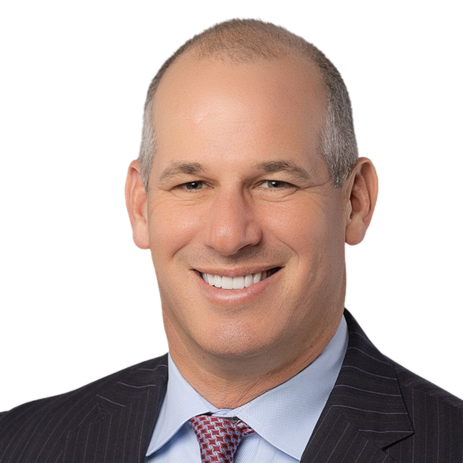
Jay Frankl is a managing director in Alvarez & Marsal’s Shareholder Activism and Contested M&A practice.

Annie Peabody is a managing director in Alvarez & Marsal’s Corporate Transformation services practice.

Final Days to Save $1,500 on
NACD Directors Summit™
2026 Registration
Register by Thursday, April 30 to take advantage of this exclusive discounted pricing.
October 11-14, 2026
The Gaylord National Harbor | Washington, DC Area