

GC Forum: Risk Governance in an Evolving Legal Landscape
Archive


NACD Northern California
Contact Us
Lisa Spivey,
Executive Director
Kate Azima,
Director of Partnerships & Marketing
programs@northerncalifornia.nacdonline.org
Find a Chapter
About The Event
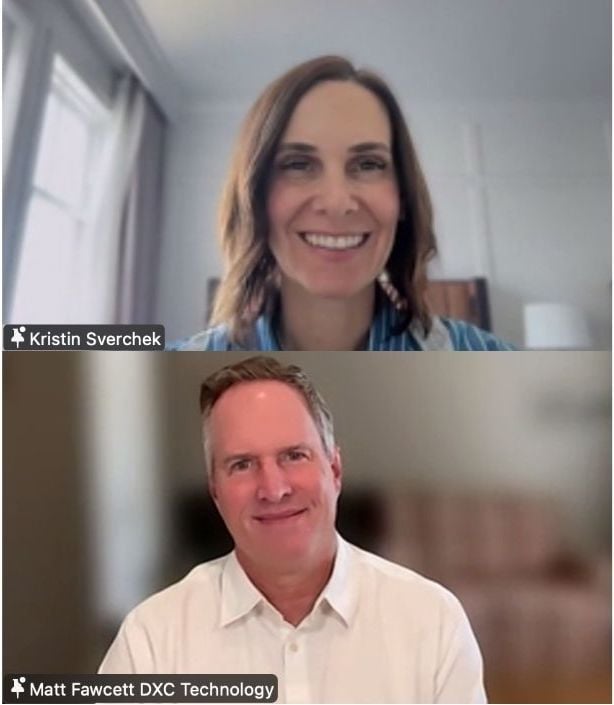
The regulatory slowdown hasn’t made the general counsel’s job easier—it has made it more uncertain. At an NACD Northern California Chapter program featuring sitting GC Matt Fawcett and former GC and board director Kristin Sverchek, who shared insights on trends shaping the GC role, including the reinterpretation of existing laws, shifting enforcement priorities, heightened scrutiny of AI claims, and rising expectations from boards and stakeholders.
VIEW THE RECORDING
KEY TAKEAWAYS
The Regulatory Environment: Less Rulemaking, More Uncertainty
- A slowdown in new federal regulations has not reduced legal complexity. Risk is emerging through reinterpretation of existing laws, evolving enforcement priorities, and increased state-level action.
- General counsel (GCs) are operating in an environment where many issues are “first impression” questions with little precedent, requiring companies to make policy decisions before regulators provide clear answers.
- Volatility has increased: legal teams may see multiple issues arise simultaneously, from tariffs to geopolitical developments to technology policy, each requiring rapid analysis and guidance to the business.
- In this environment, the GC’s role is to serve as a steady center point, maintaining calm judgment and consistency rather than reacting to headlines or daily policy shifts.
Managing Risk in a High-Velocity Environment
- Legal decision-making is accelerating as AI enables near-instant research and analysis, increasing pressure on GCs to deliver guidance at a “superhuman pace.”
- A critical discipline for legal leaders is distinguishing signal from noise, and identifying which issues require immediate action versus those where a “wait-and-see” approach is appropriate.
- Companies should act quickly when issues directly affect the business or customer commitments, while allowing the broader market or industry to establish precedent on less immediate questions.
- Even when decisions are deferred, GCs can maintain credibility by remaining responsive, communicating clearly with stakeholders, and signaling that issues are actively being evaluated.
AI Governance: Balancing Enablement and Control
- The central challenge is balancing AI governance with AI enablement. Overly restrictive frameworks can slow innovation and entrepreneurship, while insufficient oversight increases legal and reputational risk—“the future recipes we have to design aren’t going to be found in the old cookbooks.”
- Governance models are evolving quickly, moving from centralized AI oversight structures (which created bottlenecks and encouraged employees to bypass guidelines altogether) to more embedded governance approaches aligned with business workflows.
- Most organizations are adopting iterative governance models, recognizing that AI oversight must evolve continuously as technologies and use cases change. This must be clearly highlighted to the board to ensure alignment.
Board Oversight of AI
- Explicit committee-level oversight of AI remains uncommon among large public companies, with only a very small minority assigning responsibility to a standalone AI committee.
- AI oversight often defaults to the audit committee because of its risk and compliance implications, but this can unintentionally frame AI only as a control issue rather than a strategic opportunity.
- Effective boards treat AI as a cross-cutting topic, integrating it into enterprise risk discussions, strategic planning, and regular board reporting rather than siloing it.
- Directors increasingly need baseline AI literacy, with some boards also benefiting from members who bring deeper technical expertise.
AI Claims, Professional Responsibility, and Legal Credibility
- Regulators are paying increasing attention to how companies describe their AI capabilities, creating potential exposure for overstated or misleading claims about AI use coined as “AI-washing.”
- Boards and legal leaders should encourage candid conversations about what AI can and cannot do, avoiding overly optimistic assumptions about its capabilities.
- Despite rapid technological change, the foundation of credibility with boards remains authenticity, candor, and strong relationships.
Guardrails for Responsible AI Use Inside the Legal Function
- Many organizations are relying on existing legal principles—confidentiality, privilege, and professional judgment—rather than creating entirely new frameworks for AI use.
- Legal teams should be encouraged to experiment with AI tools while maintaining verification practices, such as cross-checking outputs or using multiple tools to fact-check results.
- Legal leaders must balance the profession’s traditional caution with the need to move faster, encouraging responsible experimentation with practical guardrails—“I prefer giving speeding tickets than parking tickets.”
- As AI automates more technical legal tasks over time, the most valuable capabilities for lawyers will increasingly be judgment, discernment, relationship-building, and emotional intelligence.
The General Counsel as a Strategic Advisor—and Future Director
- With many boards adding first-time directors, GCs may spend more time helping directors understand how and when to engage with management during complex or crisis situations.
- Across both experienced and new directors, trust is built through consistency, measured communication, and disciplined escalation.
- Directors value GCs who demonstrate professional independence, rather than appearing overly aligned with management or reluctant to challenge leadership when necessary.
- For GCs interested in board service, it is important to be seen as a business leader who understands enterprise value creation, not simply a legal technician.
Questions Boards and GCs Should Be Asking Each Other
- GCs should regularly ask boards: “What are you not getting that I can help provide? Are you getting too much of something, or not enough?”
- Boards can provide valuable perspective by asking GCs what they are seeing across the industry, including how peer companies and competitors are approaching similar issues.
KEY RESOURCES
The Board’s AI Risk Moment: Who Is Accountable? — NACD Northern California Program
WEBSITE MENTIONED
AI Hallucinations Cases — Damien Charlotin
SPEAKERS

Kristin Sverchek

Matt Fawcett
Thank you to our partner Catherine Zinn and Baker Botts for their ongoing support of our GC group.
NACD Northern California
Contact Us
Lisa Spivey,
Executive Director
Kate Azima,
Director of Partnerships & Marketing
programs@northerncalifornia.nacdonline.org
Find a Chapter
Final Days to Save $1,500
on NACD Directors Summit™
2026 Registration
Register by Thursday, April 30 to take advantage of this exclusive discounted pricing.
October 11-14, 2026
The Gaylord National Harbor | Washington, DC Area
By registering for an NACD or NACD Chapter Network event, you agree to the following Code of Conduct.
| NACD and the NACD Chapter Network organizations (NACD) are non-partisan, nonprofit organizations dedicated to providing directors with the opportunity to discuss timely governance oversight practices. The views of the speakers and audience are their own and do not necessarily reflect the views of NACD. |