

Governance Surveys
Directorship Magazine

Online Exclusive
Steering Through Noise: An Interview with Shelley Leibowitz
Hear a veteran director’s thoughts on how board members can help management filter out distractions to focus on what truly matters.
 How can boards maintain strategic clarity amid volatility?
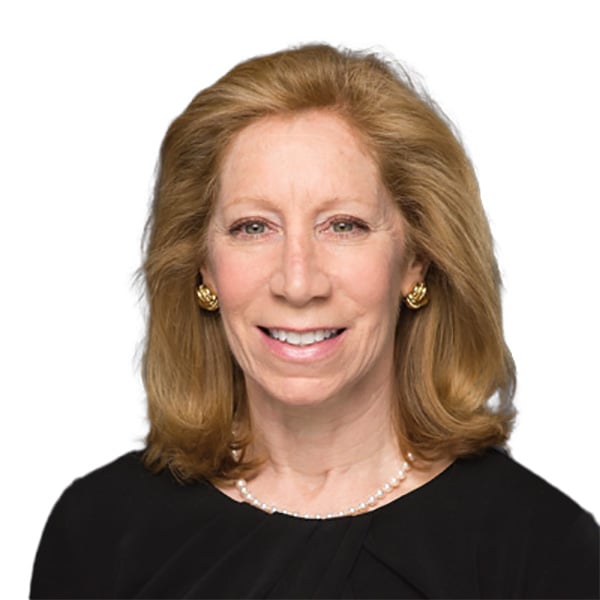
Shelley Leibowitz, NACD.DC®, president of SL Advisory and a director on the boards of BitSight Technologies, Elastic, the NACD New York chapter, Morgan Stanley, and US Financial Technology, spoke with Adam Bryant, a senior managing director at The ExCo Group, and David Reimer, CEO of The ExCo Group. In the interview below, they explore how directors can help companies “separate the signal from the noise” to build organizational resilience, as well as the key leadership traits needed in an evolving business environment.
This interview first appeared in Adam Bryant’s LinkedIn series, “The Director’s Chair.”
Reimer: What has changed for boards in recent years?
Leibowitz: After the financial crisis of 2008, boards became much more directly accountable for a wide range of risks—financial as well as operational. Awareness of cybersecurity was also becoming widespread. Currently, boards are held accountable at a higher level for growth and success over time, as well as for managing risks and averting crises. Additionally, boards are expected to be active representatives of their shareholders, their communities, and all their other constituencies.
During the [COVID-19] pandemic, we all experienced the interconnectedness of the world. Whether it's issues of public health, supply chains, tariffs, or geopolitics, there's a greater level of interconnectedness and urgency that has become visceral for all of us on a personal level and a key driver on a business level.
We use words like agility and flexibility, but they're not just words. Good process and structure allow an organization to adapt, orient, respond, and move forward when a range of factors are coming at you. When I think of the directors I admire most, the one thing they're always able to do is zero in on what's important in a world with so much noise and information. And figuring out what really matters is easier said than done.
Read Bryant’s other recent interviews:
- Jane Sadowsky, NACD.DC®, a director on the boards of Allied Gold Corp., Nexa Resources, and Scientific Games, and an NACD faculty member
- Peter R. Gleason, NACD president and CEO
- R. Eric McCarthey, a veteran leader and director who serves on the boards of Avnir, Hamra Enterprises, and Interra International
- Dorlisa Flur, NACD.DC, a board member of Blue Cross and Blue Shield of North Carolina, Sally Beauty Holdings, and United States Cold Storage
- Deborah Byers, a director on the boards of Civitas Resources, DTE Energy Co., Excelerate Energy, and Kinetik Holdings
- Herman Bulls, a director on the boards of American Red Cross, Comfort Systems USA, Fluence Energy, Host Hotels & Resorts, and West Point Association of Graduates, and the 2024 NACD Directorship 100 Public Company Director of the YearTM
Bryant: How can boards collectively help separate the signal from the noise?
Leibowitz: Think of the composition of a high-functioning board. You have people from different industries, with different skill sets and experiences, and they are spending their time in a range of arenas. Board meetings typically are thought of as opportunities for management to present to the board.
But it's a real lost opportunity if management doesn't have the opportunity to hear from board members as well. After all, why do you bring on a new board member? Because that person will bring something unique to the discussion and add value. But often in board agendas, there's no opportunity to do that. The best boards allow time for that interaction to happen.
Reimer: What is the board’s role in helping companies leverage artificial intelligence?
Leibowitz: It's early in terms of AI-enabled operating models. But the question companies have to continue to ask themselves is: Who are we? Who are our clients and our customers, and what do we do that is special? And if you can't answer those questions, then anything that follows is not going to be particularly good.
I don't think AI fundamentally changes those questions. AI allows you to acquire different clients or to offer different services, but you have to start with who you are and what you do well, and then you leverage from there.
I've spent a lot of time in the world of digital transformation, and one thing I've learned is that digital transformation generally has little with the digital side. It's the transformation, the change management enabled by the technology innovation. Human beings often resist change. Incentives and motivations really matter.
The AI discussion is fundamentally a change management and a behavioral discussion. Of course, the AI stack and enabling technologies are critical, but if you miss the human side, you miss what’s truly important. The governance and oversight matter, the ethics and trust matter, the incentives matter, and the goals matter.
Bryant: What were important early influences that shaped your leadership style today?
Leibowitz: I grew up in a small town with small-town values, and I mean that as a real positive. My mother was a teacher, and she felt strongly that all her kids would be educated and have the opportunity to succeed, and that they would not take those opportunities for granted. Her view was: If something didn’t go according to plan, what did you do that didn't make it successful? I came from a no-excuses family; my management style, my approach to life, tends to be a no-excuses approach.
I believe in personal accountability, maybe to an extreme. I feel very strongly that you don't get to choose what happens around you, but every single decision you make is about how you respond to what happens around you. And so that courage and personal accountability to me is an incredible driver, and much of that is from my mother.
Reimer: What are the X factors that separate the best leaders today?
Leibowitz: It always starts with intellectual rigor. You need a level of knowledge, wisdom, and insight that is table stakes. You have to be pragmatic and realistic, but you also have to be an optimist and you must have a clarity of vision. If it's fuzzy, it doesn't work. Clarity matters, and you need to be able to simplify strategy so that people can understand it and follow you.
Courage and integrity are pretty tightly linked, and those are all prerequisites for being a good CEO. You need the courage and strength to lead but also the humility to be able to ask for help.
Bryant: How do you complete the sentence: “The hardest part of leadership is…”
Leibowitz: Being able to see over the horizon and not getting completely bogged down in issues that may be irrelevant a year from now. The best leaders can see around corners. You have to see the second and third order consequences of what's happening, because it's not only about today. If it’s only about today, it's probably too late.
You have to look one, three, [and] five years out. I like scenario-based thinking because it's a probabilistic approach. There are no guarantees. To be prepared for the future, you have to think about different scenarios. Being able to look beyond all the challenges of today is perhaps the hardest and most important part of leadership.