

 |
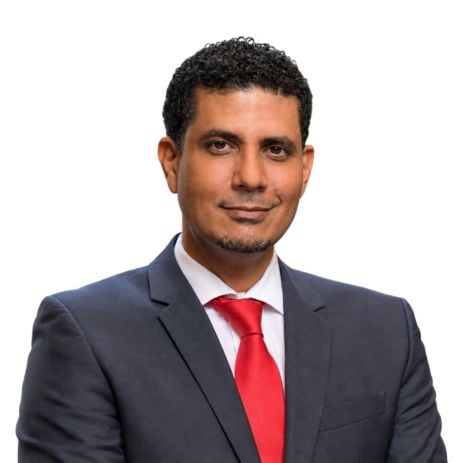
Mohamed YounisSenior Vice President, Content National Association of Corporate Directors |
Mohamed Younis oversees NACD’s content platform across digital and in-person director education, governance research, and Blue Ribbon Commission reports and other thought leadership initiatives, helping shape the organization’s voice on board leadership and corporate governance.
He is well-known for his deep expertise in creating data-driven insights, advising leaders on reputation and key stakeholder perceptions, and counseling organizations across the globe on steps to earning trust during periods of disruption, transformation, and innovation.
Prior to joining NACD, Younis served as partner and global head of research for Brunswick Group, leading the firm’s market research and analytics function advising clients on corporate reputation, geopolitical trends, policy, crisis, and strategic communications.
Before joining Brunswick, Younis spent 16 years at the global analytics firm Gallup, where he led some of its largest global and regional studies on social, political, and economic issues. After a decade of evidence-based client advisory with some of the world’s most notable private and public sector organizations, Mohamed rose to serve as Gallup’s editor-in-chief, where he was responsible for US polling, including presidential approval trends, as well as global content and media strategy for Gallup News. Throughout his tenure, Mohamed has served as a leader in public sector and management consulting businesses, building teams delivering critical data-driven advice to private and public sector clients.
Mohamed has regularly appeared on Bloomberg Surveillance, CNN, BBC, and PBS. He earned a BS in sociology from the University of California, Riverside, a JD from Washington and Lee University, and is a member of the Virginia State Bar.
Signature Topics
The Shifting US Global Order—and What It Means for the Boardroom
The rules that have long governed trade, alliances, and America’s role in the world are being rewritten in real time, and boards are being asked to respond without a clear playbook. Drawing on two decades spent studying global public opinion, political risk, and institutional trust, Younis brings executives a rigorous, evidence-based lens on America’s shifting global posture that helps them move past the headlines to understanding what it means for enterprise risk, stakeholder trust, and long-term strategy.
Stakeholder Segmentation and Institutional Trust in the Age of AI
Artificial intelligence is changing how organizations are perceived by the very stakeholders they depend on—employees, customers, investors, and regulators. Treating “stakeholder trust” as a single, monolithic metric causes boards to miss where real exposure lives, since each group forms and loses trust differently and for different reasons. Mohamed brings his expertise in segmentation discipline to AI oversight, helping directors move past boilerplate “build AI trust” to ask sharper, board-level questions such as “Which stakeholder groups are most exposed as AI adoption accelerates?”, “Where is trust being extended faster than it is being earned?”, and “What governance signals—on data use, transparency, workforce impact, and accountability—actually move the needle for each audience?”