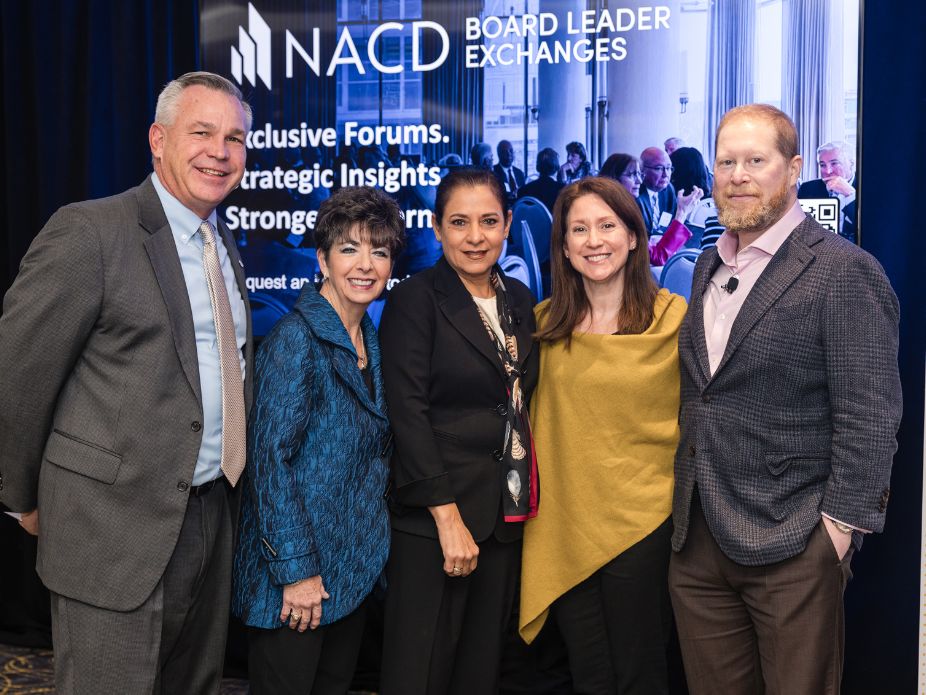
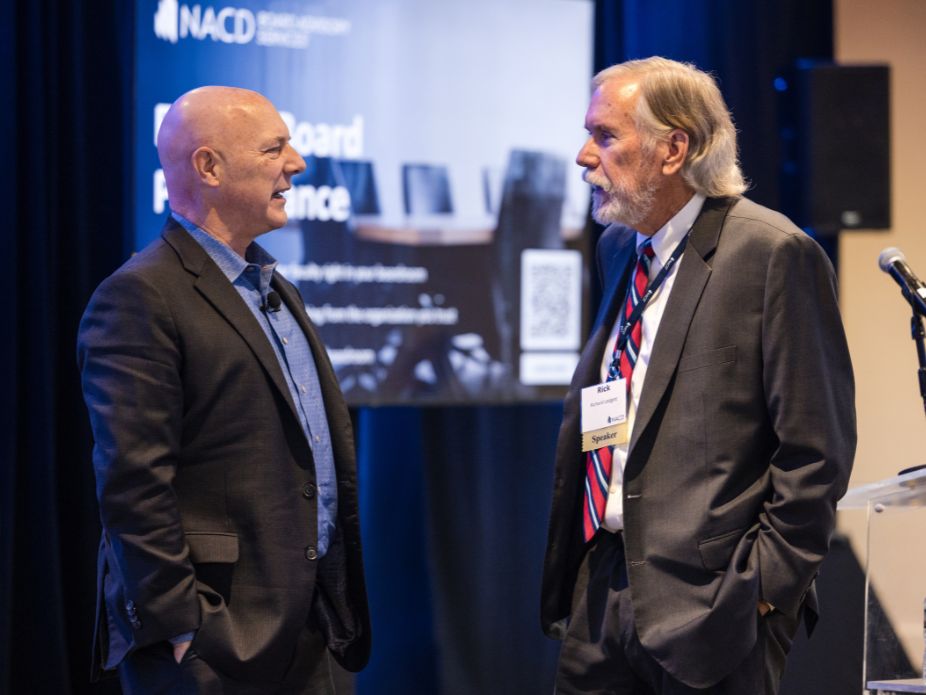
Leading Minds of Tech convened board directors in New York for a candid discussion on AI, cybersecurity, and technology oversight—issues that are now central to board responsibility. Directors gained practical guidance on governing emerging technology, balancing risk and value, and leading through disruption.
What attendees gained: clarity, better questions to ask, and a sharper lens on what effective oversight looks like now
Why Technology Oversight Is a Board Imperative
Directors were urged to reframe technology oversight as part of enterprise risk management, not a siloed IT concern. The most resilient organizations treat cyber and AI risks the same way they treat financial, regulatory, or reputational risk: with clear accountability, cross-functional leadership, and ongoing board engagement.
Key takeaway: Technology oversight is not about perfect defense. It’s about preparedness, resilience, and informed decision-making.
 Cyber Risk: From an IT Problem to an Enterprise Risk Reality
A central theme of the session was how cyber-risk oversight has evolved—and what boards can learn from organizations that get it right—starting with an understanding of three interconnected components:
- Threats: Nation-states, organized crime, and financially motivated actors operating at scale
- Vulnerabilities: Expansion of exposure from new technology adoption (cloud, AI, and supply chains), often faster than controls evolve
- Impact: Financial loss, reputational damage, operational disruption, and—increasingly—destructive attacks targeting core infrastructures
Boards were encouraged to move away from the myth of perfect scrutiny and instead focus on visibility, speed, and recovery. Breaches are often preventable, but they are always challenging. Planning for failure, practicing response, and testing assumptions were repeatedly highlighted as essential board responsibilities.
Asking Better Boardroom Questions on AI
Five critical areas emerged:
- Skills and expertise: Do we have the right talent in house? How was that expertise developed, and where are we supplementing with trusted external partners?
- Training and enablement: Are employees being meaningfully trained or simply given access and told “good luck”? Do they understand what experimentation is permitted—and what is not?
- Infrastructure and data readiness: Is our data reliable, governed, and fit for purpose? What domains are ready for AI use today?
- Change management and communication: How are we addressing workforce anxiety and uncertainty about AI? Do employees understand the why behind adoption?
- Ethics and guardrails: What use cases are prohibited? How is access controlled? How are risks identified beyond high-level theory?
Bottom line: Better questions lead to better answers—and better outcomes.
AI and Value Creation: Rethinking ROI
When it came to measuring AI’s return on investment (ROI), the panel challenged conventional thinking. Traditional ROI calculations often fall short, especially when the broader infrastructure to fully realize AI’s value is being built.
Instead, directors were encouraged to consider:
- The missed opportunity cost of not engaging with AI
- Where more mature technologies (machine learning, forecasting, automation) already deliver measurable returns
- How digital IQ must expand beyond leadership and become embedded across the organization
The Board-CISO Relationship: Oversight, Not Adversarial
Another critical takeaway centered on the board’s relationship with the chief information security officer. Effective oversight depends on trust, transparency, and constructive dialogue. Directors were encouraged to build open, ongoing relationships with security leaders; expect dynamic reporting; and ask fundamental questions (who, what, when, where, why, and how).
Workforce, Culture, and the Long Game
Beyond technology, the discussion turned to people. AI’s impact on workforce development, training, and culture remains under discussed and often poorly managed.
Speakers highlighted that while some tasks will be automated, critical thinking, judgement, and experience are becoming more—not less—valuable. AI will not replace people; people using AI will replace people who don’t.
Boards were urged to support honest conversations with management about upskilling, change management, and long-term talent strategy.
What Directors Left With
To close, each panelist offered a concise takeaway on:
Artificial Intelligence
Use AI, but use it thoughtfully.
Cybersecurity
Cyber risk is rising, but fear is not a strategy.
Tech Adoption
Meaningful adoption matters more than fast adoption.
AI Governance
AI can be a powerful growth driver—with the right governance.
Inside the Event
Leading Minds Photo Highlights
Continue Your Learning
Recommended NACD Governance Resources

NEW Effective AI Oversight Certificate Program
Build the oversight skills today’s boards need. Developed with Carnegie Mellon University, this certificate equips directors to govern AI, data strategy, and digital transformation with rigor and accountability.

NACD Directors Summit™ 2026
October 11-14 | Washington, DC Area
Join the nation’s leading gathering for board directors October 11-14, 2026 in the Washington, DC area. Explore board priorities and connect with peers shaping the future of modern governance. Register by January 15 to save $2,000.

NACD Master Class®: Technology & Innovation Oversight
April 9 - April 10 | Washington, DC
Gain actionable insights, practical frameworks, and expert guidance to equip your board for the challenges and opportunities of a tech-driven future. This event is exclusively for NACD members.